
A traditional method for relieving pain
and promoting healing
Acupuncture is a method of traditional Chinese medicine dating back thousands of years, in which the body’s self-healing powers are activated by inserting needles into specific points on the body. Acupuncture can be used to treat a wide range of pain and health issues and promotes general well-being. Thanks to Dr Beate Helgers’ comprehensive training, which includes the B-Diploma in Acupuncture, we are able to offer you a variety of acupuncture techniques, each tailored to your individual needs.
How does acupuncture work?
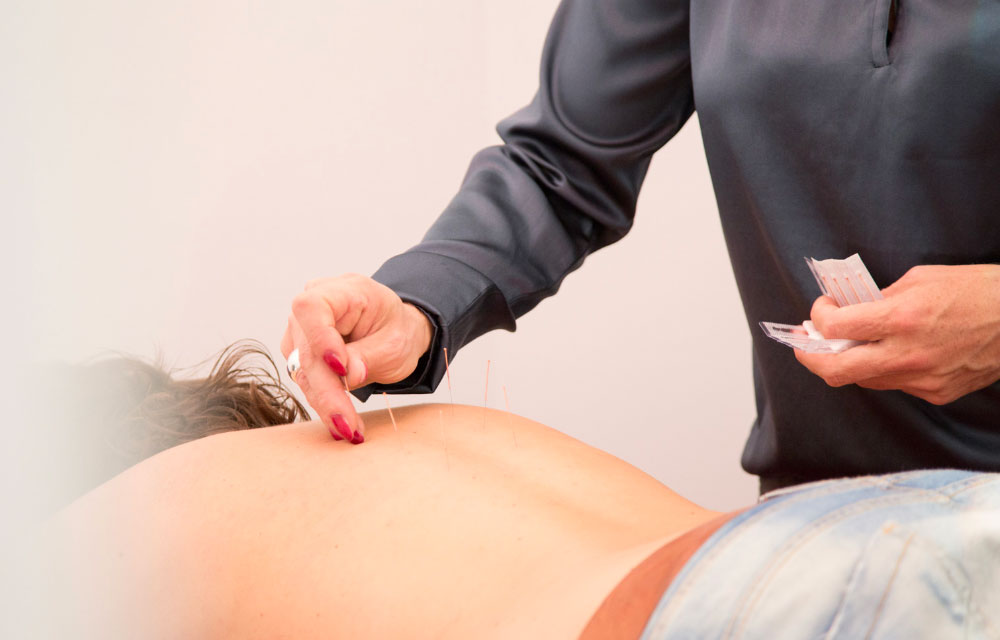
Acupuncture is a gentle form of therapy in which fine needles are inserted into specific points on the body to stimulate the energy pathways (meridians) and restore balance within the body. Stimulating these acupuncture points can interrupt pain signals, improve blood circulation and promote the body’s natural healing processes. Acupuncture is a safe and effective treatment for pain that can be used for a wide range of conditions and illnesses – from pain relief and tension to supporting general health.
Why choose acupuncture with
Dr Beate Helgers?
Dr Beate Helgers At our practices, we offer various types of acupuncture to address your specific symptoms and achieve the best possible results:
- Body acupuncture:
The traditional form of acupuncture, in which needles are inserted into various points on the body to regulate the flow of energy, relieve pain and promote well-being. - Ear acupuncture:
This method stimulates points on the ear that correspond to specific organs or parts of the body. It is often used to treat pain, stress and sleep disorders. Permanent needles are usually used on the ear; these consist of small plasters fitted with tiny, short needles and can remain in place for longer. - Trigger point acupuncture:
This technique focuses on relieving muscle tension by inserting needles into trigger points (painful muscle knots). - One-point acupuncture:
In this minimal technique, only a single acupuncture point is treated to specifically relieve symptoms. - Dry needling:
Here, needles are inserted directly into tense muscles to treat trigger points and relieve muscle tension. - Laser acupuncture:
A pain-free form of acupuncture in which a laser is used instead of needles to stimulate the acupuncture points. This method is particularly suitable for sensitive patients or for specific conditions.
When do we use acupuncture?
Acupuncture can be used in many areas of medicine and is particularly effective:
- For pain relief:
Acute and chronic pain, such as back pain, joint pain or migraines, can be treated specifically. - For tension and stress:
Muscle tension and stress-related symptoms can be gently relieved with acupuncture. - For sleep disorders and exhaustion:
Acupuncture can calm the nervous system and help reduce sleep problems. - For sports injuries:
To speed up recovery and relieve pain following overexertion or injuries. - To support rehabilitation:
Following injuries or operations, acupuncture helps to speed up healing and strengthen the body.
The benefits of acupuncture at Dr Beate Helgers’
practice
- Holistic:
Acupuncture aims to restore balance to the whole body, rather than simply treating the symptoms. - Versatile:
From pain relief and muscle tension to the treatment of stress – acupuncture can alleviate many ailments. - Gentle and non-invasive:
Acupuncture is a treatment method with few side effects and minimal discomfort. - Personalised: Each acupuncture session is carried out in a relaxed atmosphere whilst you are in a comfortable position, for example, directly on the relaxing Andullation couch – which promotes blood circulation – or on a magnetic field.
- Can be combined with other forms of therapy:
Acupuncture can be optimally combined with all other forms of therapy.
Are there any reasons why one might not be suitable for acupuncture
?
Acupuncture is a very gentle and safe treatment method that can be used without any problems in most cases. However, there are certain circumstances in which acupuncture should either be adapted or avoided:
- Pregnancy: During pregnancy, acupuncture can help to relieve discomfort. It is particularly beneficial in this context, as many other forms of therapy cannot be used during pregnancy. However, certain acupuncture points that could trigger labour should be avoided. I always tailor the treatment to the individual to ensure the safety of both mother and baby.
- Blood clotting disorders or blood thinners: Particular care must be taken with patients who are taking blood thinners or who suffer from blood clotting disorders. This may lead to increased bruising at the insertion sites. In such cases, we use particularly fine and thinner needles than usual. We discuss this before treatment to select the correct technique and approach.
- Acute infections or skin conditions: In the event of infections or skin conditions at the sites where acupuncture is to be administered, we may suggest alternative treatment methods or postpone the treatment until the skin has healed. As a rule, a skin condition is generally not a problem at all and does not constitute a contraindication.
- Severe fear of needles: For patients who have a strong fear of needles, laser acupuncture offers an excellent alternative. This pain-free method requires no needles at all, yet is just as effective.
How do we carry out an acupuncture treatment?
The procedure for an acupuncture session
An acupuncture session begins with a detailed consultation, during which we discuss your symptoms and select the most suitable acupuncture method. The treatment itself is virtually painless, as the fine needles are barely noticeable. Depending on your symptoms, the needles are left in place for 20 minutes to allow them to take full effect.
With my many years of experience and my Bachelor’s degree in Acupuncture, I offer you a comprehensive and personalised acupuncture treatment that is specifically tailored to your symptoms. Whether for pain relief, relaxation or to promote healing – acupuncture can help you improve your well-being and provide long-lasting relief from your symptoms.
Book an appointment now to find out more about the various acupuncture methods and discover the right treatment for your health. I look forward to helping you with this gentle and effective method!

Questions and Answers about Acupuncture
FAQs
How often should acupuncture be carried out?
The number of treatment sessions depends on the nature and severity of your symptoms. Several sessions are often recommended to achieve lasting improvement. In the case of acute symptoms, a single session may be enough to help, whilst for chronic problems, treatment over several weeks may be advisable.
Are there any side effects?
Acupuncture generally has few side effects. In rare cases, slight bruising may occur at the insertion site, or temporary tiredness may set in. However, these reactions are harmless and usually disappear within a few hours.
Can acupuncture be combined with other treatments?
Yes, acupuncture can be combined very effectively with other forms of therapy, such as neurostimulation, radial shockwave therapy, electrostimulation or exercise therapy. Together, we will develop a personalised treatment plan tailored precisely to your needs.